
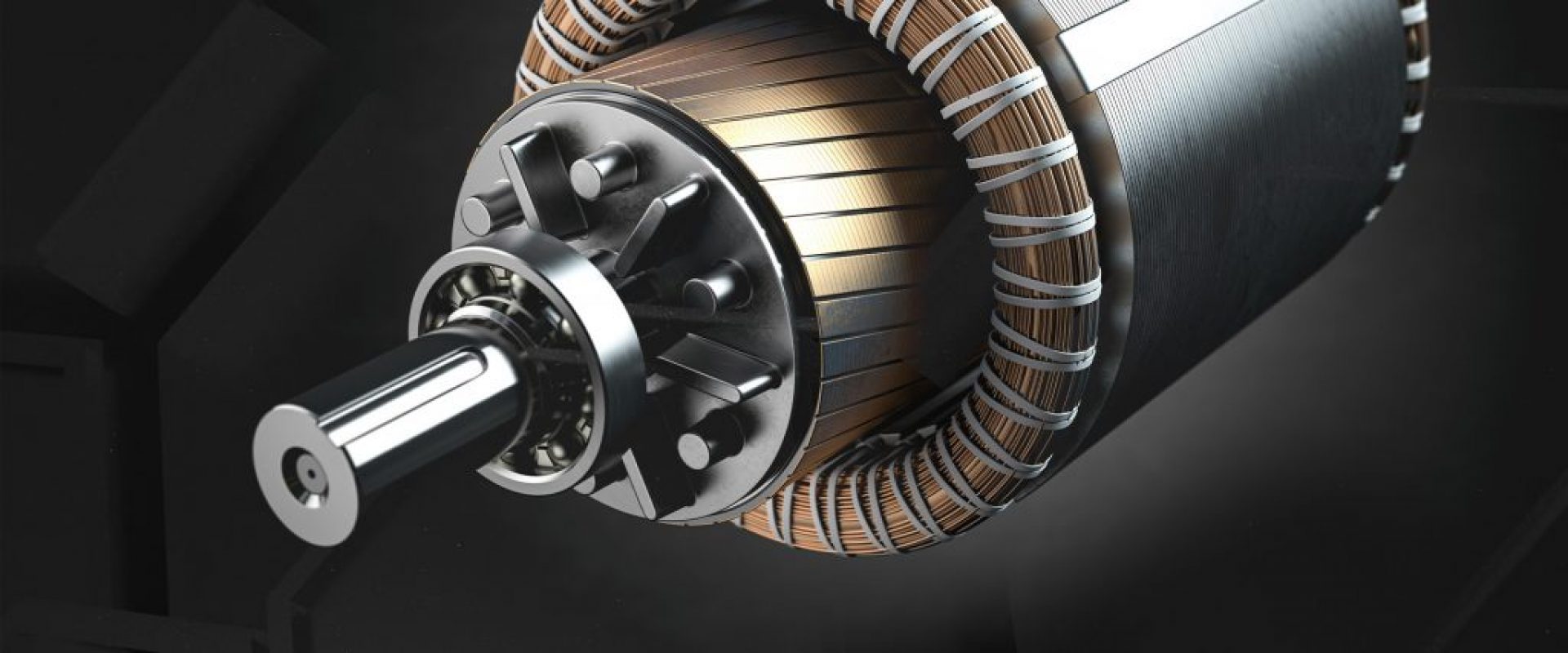
Plastics in e-mobility: overmolding components with thermosets
Possibilities for using plastics in electric motors and controls – overmolding components with thermosets

Thermal expansion comparable to metal, resistant and insulating
New drive technologies and motor concepts increasingly focus on higher efficiency and ever more compact designs. This directly leads to higher energy densities and therefore also to increasing demands on the individual parts and components.
For applications with such high thermo-mechanical requirements (e.g. temperatures >180°C), in some cases combined with aggressive media, thermoset materials are ideally suited.
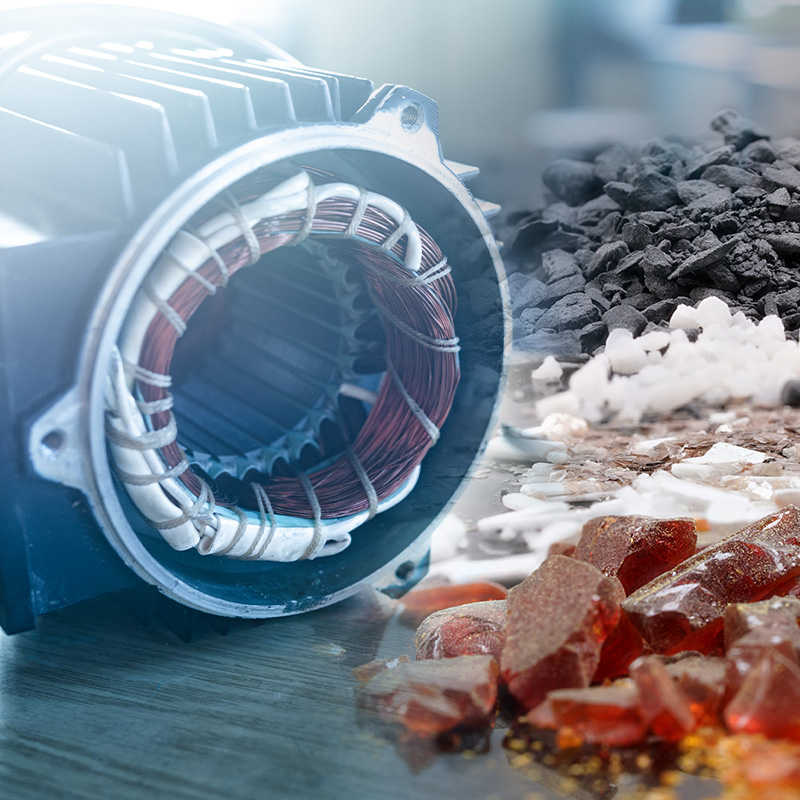
As an impregnation material for wire windings (rotor/stator) or as an encapsulation or fixing material for control boards, magnets and sensors, epoxy molding compounds, for example, offer a unique combination of processing and part properties.
Established in combustion engines, increasingly used in electric drives
Thanks to their excellent thermo-mechanical resistance, phenolic resins in particular are established in classic combustion engines for functional parts such as pump components, housings or pistons. Newly developed thermoset materials are now also increasingly used in e-motors – especially epoxy molding compounds.
Also read our article on the successful series production of electric axial flux motors.
Typical examples of today's applications for technical thermosets include:
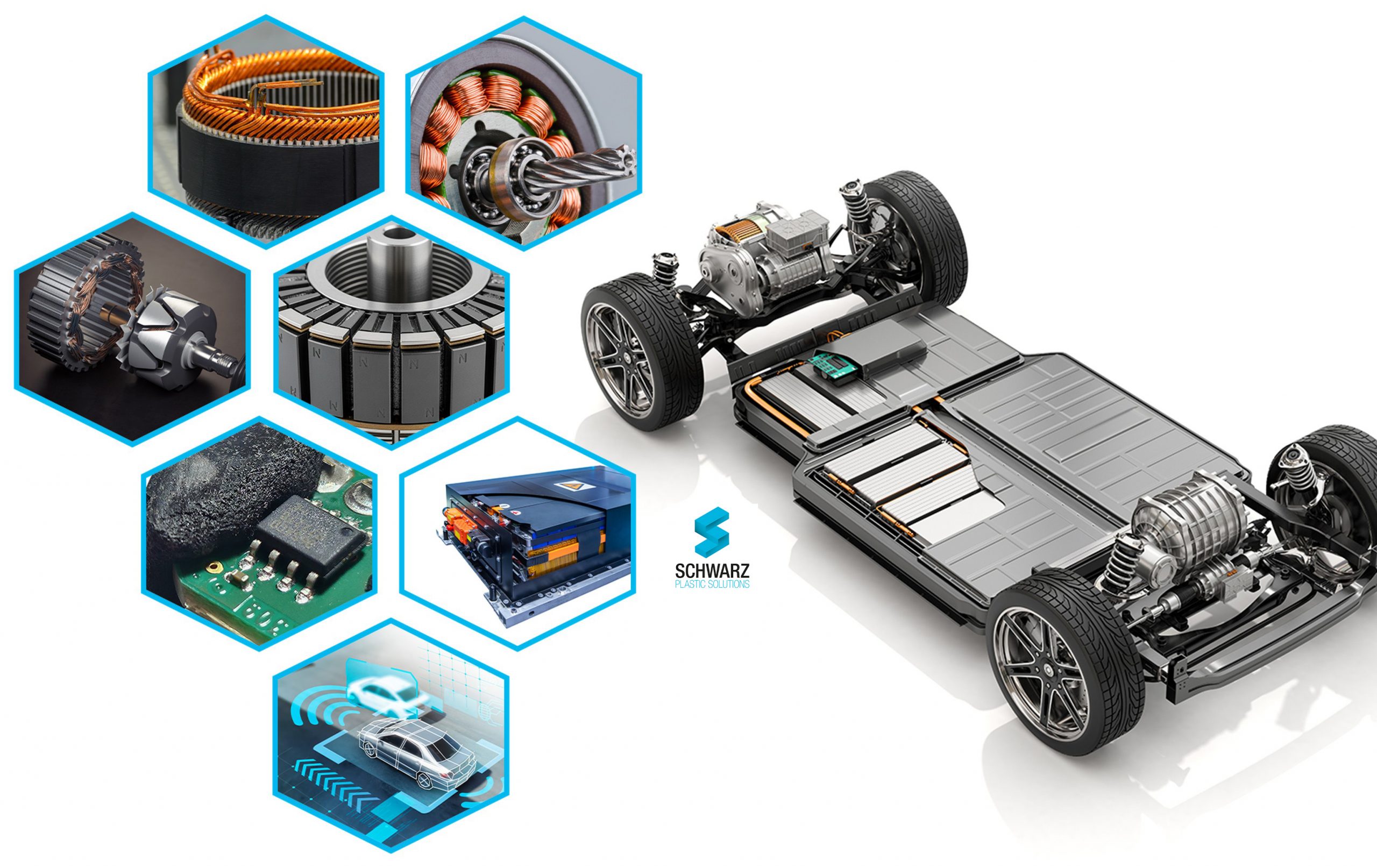
Thermoset components in e-mobility applications

Overmolding of winding packages in stator and rotor
Magnet fixation
Shielding housings
Encapsulation of control boards and circuit boards
Overmolding of sensors
Radar and lidar components
Battery components with media contact
Series-capable processing by injection molding instead of potting
With injection molding (or transfer molding), parts can be filled efficiently at extremely low pressures and comparatively low temperatures without damaging sensitive electronic components, solder contacts or wire insulation.
Compared with other technologies for processing resin-based materials such as potting processes or autoclaves, injection molding makes it possible to produce ready-to-use components at minute cycle times with stable process settings.
At Schwarz Plastic Solutions we have already successfully supported and implemented several thermoset projects for electric motors.
In line with the times – insights from the International Vienna Motor Symposium
From April 22 to 24, around 1,000 representatives from industry, politics and research met again at the 47th International Vienna Motor Symposium in the Vienna Hofburg to discuss the future of mobility. Over the 2 days, the full range and current status of drive concepts were presented in 3 parallel lecture sessions. The program also covered the availability and supply of fuels and energy with regard to technological and political challenges, as well as the general structural change of the automotive industry in the context of global market developments.
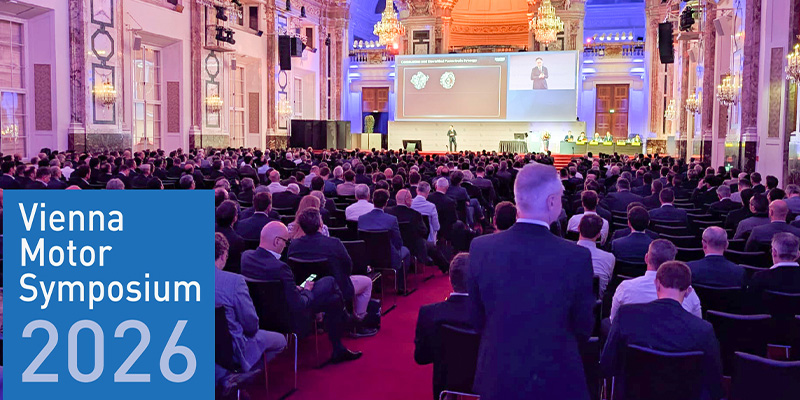
Perhaps the most important message of the event, on which all participants agreed, was that there will not be one dominant solution for future low-emission mobility. Instead, OEMs rely on a technology-open, systemic approach in which locally and globally differentiated solutions, strongly influenced by energy availability and infrastructure, focus above all on hybrid concepts. This means that alongside battery-electric drives, hydrogen technologies (combustion as well as fuel cell) and “classic” combustion engines (e-fuels) were also presented. The focus was always on increasing efficiency and on an intelligent, software-driven, application-optimized hybridization of the systems.
Alternative fuels were presented as another key to the future of mobility. Synthetic e-fuels produced from renewable energy could keep classic combustion engines usable, while biofuels remain relevant above all for existing fleets. In parallel, hydrogen is also moving into focus, especially in commercial vehicles. Decisive for the success of these approaches, also in a political context, is the sustainable production of the fuels and the build-up of a corresponding infrastructure.
Different drive solutions – all with high component requirements
The visit to the International Vienna Motor Symposium has shown that the development of mobility toward a sustainable future is undergoing a clear shift toward differentiated hybrid drive solutions. To implement these drive solutions, highly specialized material solutions are required in the specific assemblies for the individual components and parts. Schwarz Plastic Solutions GmbH supports these solutions in the field of reactive thermoset materials and special thermoplastics as an engineering service provider in development and problem solving.